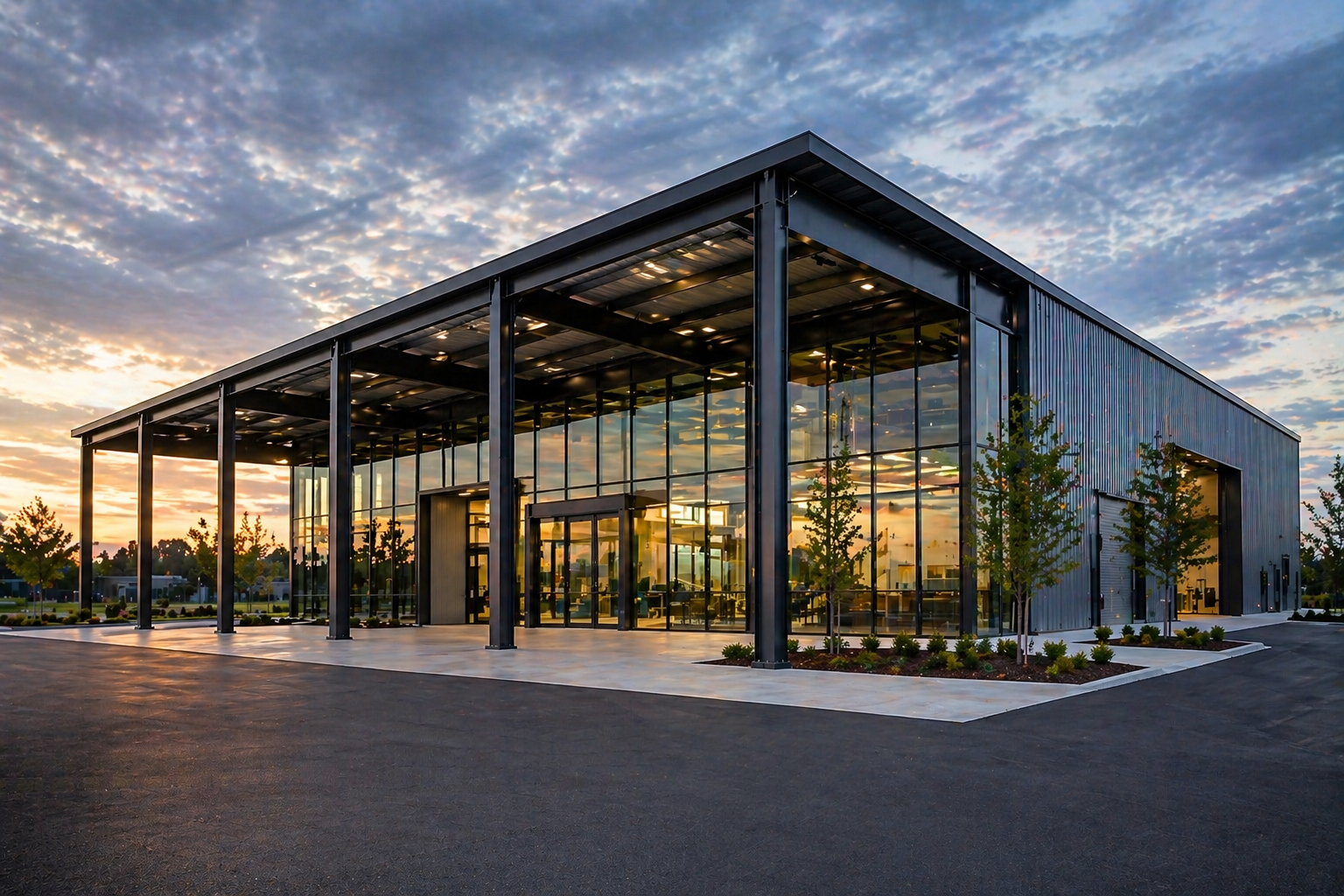
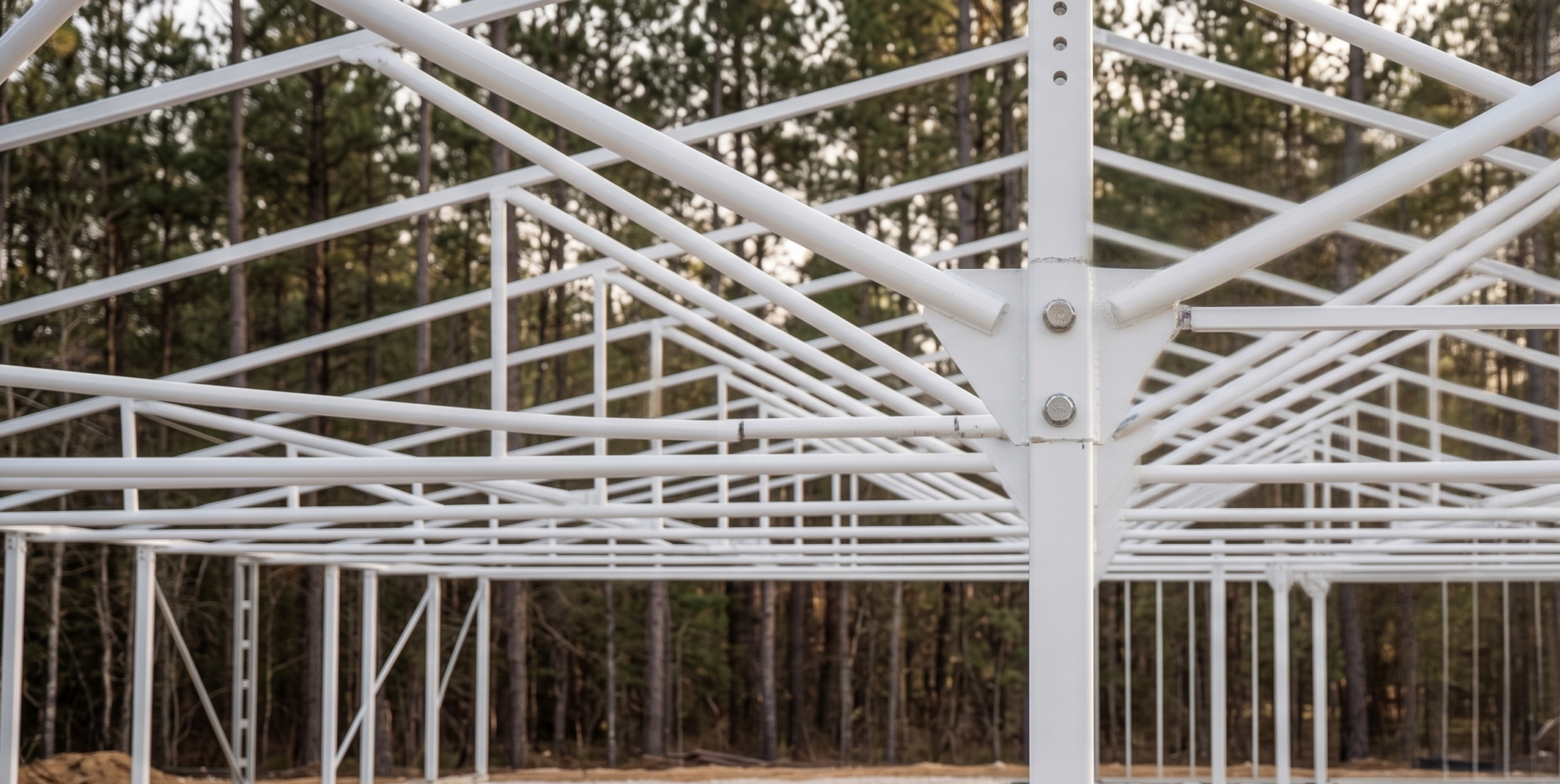
Tube steel buildings use hollow structural sections (HSS)—square, rectangular, and round closed-profile steel members—as their primary structural framing. While hot-rolled I-beams dominate the pre-engineered metal building market, steel tube buildings have carved out a significant and growing role in applications where their unique structural properties deliver clear advantages over conventional open-section framing.
According to the Steel Tube Institute, HSS accounts for approximately 18 percent of the structural steel market in the United States, with construction applications consuming roughly 60 percent of all HSS produced. The Allied Market Research structural steel tube market report values the global market at $105.3 billion in 2023, with projections reaching $167.5 billion by 2033 at a CAGR of 4.8 percent—reflecting growing adoption of tube steel across commercial, industrial, and institutional construction.
This guide examines tube steel buildings in depth—covering their structural advantages, practical limitations, ideal applications, and cost considerations—to help building owners, developers, and general contractors determine when steel tube buildings make the most sense for their projects. For foundational context on how different framing systems compare, SteelCo’s steel building design guide provides a comprehensive overview.
Table of Contents
What Are Tube Steel Buildings?
Structural Advantages of Tube Steel Construction
Limitations and Challenges of Tube Steel Buildings
Common Applications for Steel Tube Buildings
Cost Factors for Tube Steel Building Projects
When Tube Steel Buildings Make the Most Sense